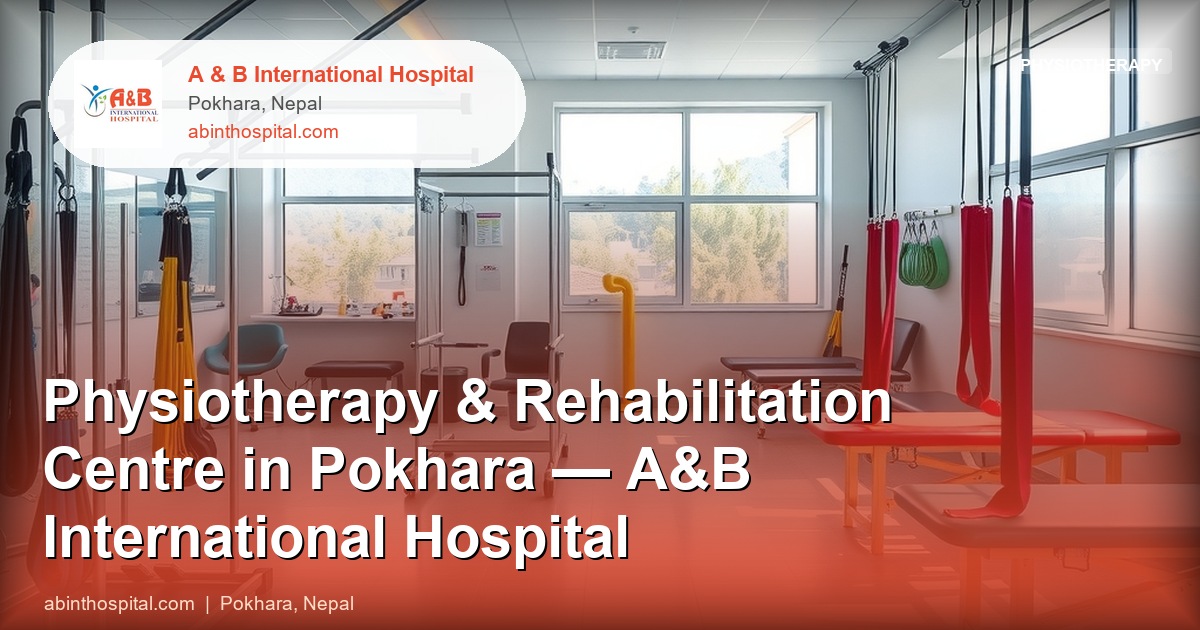
Physiotherapy & Rehabilitation Centre in Pokhara — A&B International Hospital
Physiotherapy is the branch of healthcare that uses physical means — exercise, manual therapy, electrotherapy, heat, and movement — to restore function, reduce pain, and prevent disability following injury, surgery, neurological illness, or musculoskeletal degeneration. In Pokhara, where trekking injuries, farming-related back injuries, post-stroke disability, and post-surgical rehabilitation are all common presentations, access to qualified physiotherapy significantly affects clinical outcomes. A&B International Hospital’s physiotherapy and rehabilitation centre provides comprehensive specialist physiotherapy services, with ECHS coverage for eligible ex-servicemen.
What Physiotherapy Services Are Available at A&B International Hospital?
A&B’s physiotherapy centre covers five main domains of care: musculoskeletal physiotherapy, neurological rehabilitation, post-surgical physiotherapy, sports physiotherapy, and pediatric physiotherapy. The centre operates with qualified physiotherapists trained in evidence-based practice, supported by a range of therapeutic modalities and exercise equipment.
Musculoskeletal Physiotherapy
Musculoskeletal (MSK) physiotherapy addresses conditions of the bones, joints, muscles, tendons, and ligaments. This includes back pain (the most common single presentation in the physiotherapy centre), neck pain, shoulder disorders, knee pain, hip conditions, and post-fracture rehabilitation.
Back pain — particularly mechanical low back pain — is the leading cause of disability globally and is exceptionally common in Nepal among both agricultural workers and desk-based professionals. Physiotherapy is substantially more effective than long-term pain medication for mechanical back pain, and is the recommended first-line treatment by international guidelines.
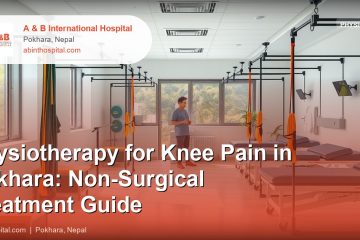
Knee osteoarthritis, a common condition in older adults and in the large veteran population of the Pokhara region, responds well to structured physiotherapy addressing quadriceps strengthening, neuromuscular control, and activity modification.
Shoulder conditions — rotator cuff tears, frozen shoulder, impingement syndrome — have specific physiotherapy protocols based on the underlying diagnosis. Undifferentiated treatment of all shoulder pain yields poor outcomes; accurate assessment by a qualified physiotherapist is essential.
Neurological Rehabilitation
Neurological physiotherapy addresses the movement consequences of conditions affecting the brain and spinal cord: stroke, traumatic brain injury, Parkinson’s disease, spinal cord injury, and multiple sclerosis. The scientific basis of neurological rehabilitation is neuroplasticity — the brain’s capacity to reorganise and form new connections in response to training.
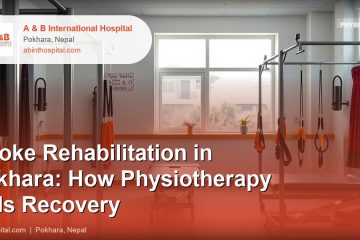
Stroke rehabilitation is the most common neurological physiotherapy need in Pokhara, given the high prevalence of stroke in the region’s older and hypertensive population. Early mobilisation, gait retraining, arm function rehabilitation, and balance training are all components of post-stroke physiotherapy.
Post-Surgical Physiotherapy
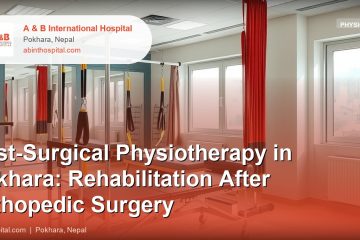
Surgery without rehabilitation is frequently an incomplete intervention. Physiotherapy following joint replacement, spinal surgery, and tendon repair determines the functional outcome — whether the patient achieves the mobility and strength that the surgery was intended to restore.
What Treatment Modalities Does A&B Physiotherapy Use?
Manual therapy encompasses hands-on techniques including joint mobilisation, manipulation, and soft tissue massage. It is used to restore joint range of motion, reduce pain, and address muscle tightness. Manual therapy is most effective when combined with exercise rather than used in isolation.
Therapeutic ultrasound delivers high-frequency sound waves to tissues, producing thermal and non-thermal effects that promote healing, reduce inflammation, and increase tissue extensibility. It is used for tendinopathies, muscle strains, and scar tissue.
TENS (transcutaneous electrical nerve stimulation) delivers low-level electrical current through skin electrodes, modulating pain signals through gate-control and endorphin mechanisms. It is an adjunct to active rehabilitation, not a standalone treatment.
Exercise therapy is the most evidence-based component of physiotherapy for virtually every condition. Specific strengthening, stretching, proprioception, and cardiovascular conditioning programmes are designed individually for each patient based on their assessment findings.
Heat therapy (heat packs, infrared lamps) reduces muscle spasm and pain before treatment. Cold therapy reduces acute inflammatory swelling. Both are adjuncts to the core physiotherapy programme.
Is ECHS Coverage Available for Physiotherapy at A&B?
Yes. A&B International Hospital’s physiotherapy department is covered under ECHS for eligible retired defence personnel and their entitled family members. Physiotherapy is a significant component of post-surgical rehabilitation after joint replacement and orthopaedic procedures — all of which are high-need services in the veteran population.
Chronic conditions including back pain, cervical spondylosis, post-stroke rehabilitation, and knee osteoarthritis qualify for ECHS-covered physiotherapy. The A&B team assists beneficiaries in ensuring correct documentation and referral pathways.
Why Is Physiotherapy Important Alongside Surgery and Other Medical Treatment?
Surgery addresses structural problems — removing a damaged disc, replacing a worn joint, repairing a torn tendon. What surgery cannot do is rebuild the muscle strength, joint control, movement patterns, and functional confidence that the underlying problem or the surgery itself has disrupted. This is the job of physiotherapy.
A patient who has a total knee replacement without structured physiotherapy will likely achieve less knee function than a patient who completes their rehabilitation programme fully. A stroke patient who receives early physiotherapy recovers more function than one who rests in bed. The evidence for this is not marginal — the difference in outcomes is substantial.
In Nepal, where physiotherapy has historically been seen as an optional add-on rather than an essential component of medical care, patient outcomes have suffered. A&B’s model integrates physiotherapy into the treatment pathway from the outset.
How Do I Book a Physiotherapy Appointment at A&B?
Initial physiotherapy appointments involve a comprehensive assessment: history, physical examination, posture analysis, movement assessment, and relevant special tests. The physiotherapist then explains the findings, establishes treatment goals with the patient, and begins the first treatment session in the same appointment.
Patients may self-refer for musculoskeletal conditions (back pain, shoulder pain, sports injury). For post-surgical rehabilitation and neurological conditions, a referral from the treating physician or surgeon is helpful but not always required.
Most physiotherapy conditions require multiple treatment sessions over weeks. Consistency of attendance is directly correlated with outcome. Home exercise programmes — prescribed and explained by the physiotherapist — are an essential component of recovery between sessions.
A&B International Hospital
Pokhara-02, Bindhyaabasini Way to Sarangkot
Phone: +977 061-412512
Website: abinthospital.com
For musculoskeletal pain, post-surgical rehabilitation, neurological recovery, or sports injuries, A&B International Hospital’s physiotherapy centre in Pokhara provides evidence-based assessment and treatment. ECHS polycards accepted for eligible veterans and their families.